When you walk into a jewellery store or look to sell old gold in Sri Lanka, the word "Karat" (often abbreviated as KT or K) is the most critical term you will hear. But what does it actually mean, and why does it make such a massive difference in the value of your gold?
What Does Karat Mean?
A karat is a unit of measurement used to denote the purity of gold. In its purest form, gold is extremely soft and malleable—so soft that it can be bent with bare hands. Because pure gold is too soft for everyday wear, it is mixed with other metal alloys (like copper, silver, zinc, or nickel) to make it strong and durable.

The karat system measures gold purity on a scale from 0 to 24. Therefore, 24-karat gold is 100% pure gold, and any lower number represents a ratio of gold to alloy metals.
"Understanding gold karats is key to getting a fair price. At Vilva Gold, we walk you through the testing process so you know the exact purity of your gold before making any decisions."
The Karat Breakdown
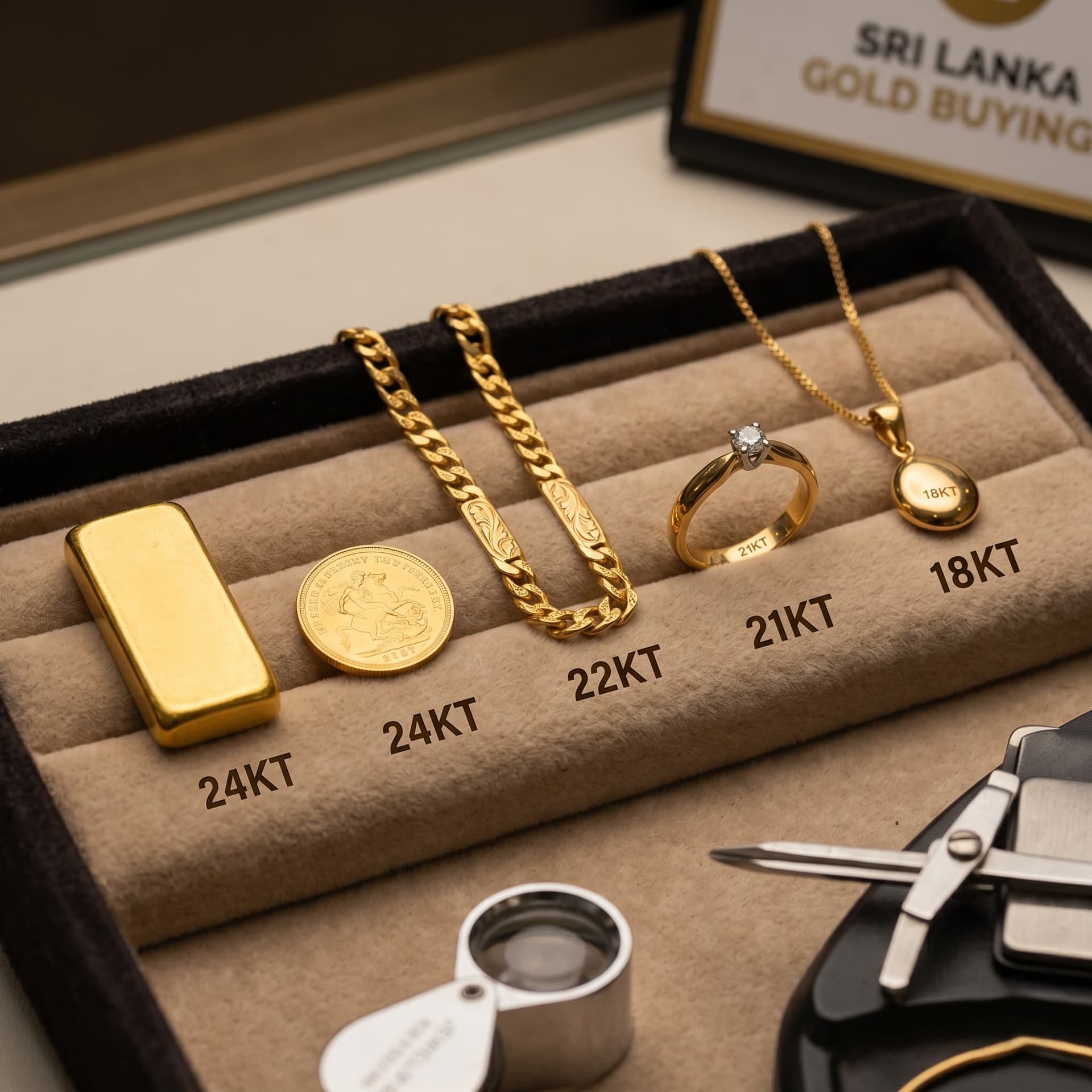
1. 24K Gold (100% Pure Gold)
- Purity: 99.9% to 100% Gold
- Characteristics: Vibrant yellow colour, very soft, easily scratched, and highly valuable.
- Best For: Investment bars, bullion coins, and ceremonial jewellery that is rarely worn.
- Sri Lankan Context: Typically referred to as "Sovereign Gold" in its purest form, mostly kept as gold biscuits or coins for financial security.
2. 22K Gold (91.6% Pure Gold)
- Purity: 91.6% Gold and 8.4% Alloys (known as 916 Gold)
- Characteristics: Rich yellow luster, slightly harder than 24K but still delicate.
- Best For: Premium traditional bridal jewellery, necklaces, and bangles.
- Sri Lankan Context: This is the absolute gold standard for bridal and heirloom jewellery in Sri Lanka. If you bought bridal jewellery in Colombo, it is almost certainly 22K (916) gold.
3. 21K Gold (87.5% Pure Gold)
- Purity: 87.5% Gold and 12.5% Alloys
- Characteristics: Durable, with a very bright yellow tint.
- Best For: Elaborate daily wear jewellery.
- Sri Lankan Context: Popular in Middle Eastern designs imported or crafted locally. It offers a great balance of purity and strength.
4. 18K Gold (75.0% Pure Gold)
- Purity: 75.0% Gold and 25.0% Alloys
- Characteristics: Very durable, less likely to scratch, often used for setting precious diamonds and gems.
- Best For: Engagement rings, diamond jewellery, and modern daily-wear items.
- Sri Lankan Context: Widely used for diamond rings and gemstone-encrusted jewellery in Sri Lanka because the alloys provide the strength needed to hold precious gems securely.
How Purity Affects Resell Value
When you sell gold to a licensed buyer like Vilva Gold, the price is calculated based purely on the actual gold content, not the overall weight of the piece. For example, if you have 10 grams of 18K jewellery, only 7.5 grams of it is pure gold. The remaining 2.5 grams of copper or zinc holds no commercial gold resell value.
Before you sell, look for the purity stamps inside the jewellery band. You might see stamps like "916" (which means 22K), "750" (18K), or "22K" directly. Understanding these markings ensures you get an accurate quote and avoid being misled.